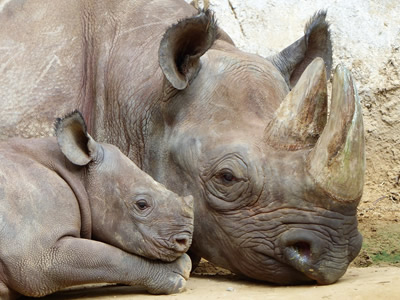
Rhino Times
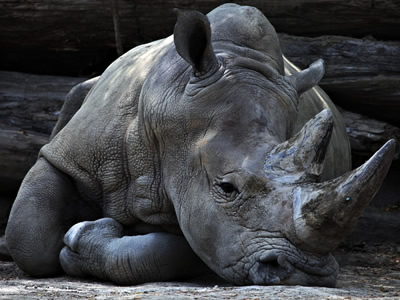
Endangered Species
Endangered species, any species that is at risk of extinction because of a sudden rapid decrease in its population or a loss of its critical habitat. Previously, any species of plant or animal that was threatened with extinction could be called an endangered species. The need for separate definitions of "endangered" and "threatened" species resulted in the development of various categorization systems, each containing definitions and criteria by which a species can be classified according to its risk of extinction. As a rule, a range of criteria must be analyzed before a species can be placed in one category or another
According to the International Union for Conservation of Nature’s Red List of Threatened Species, over 26,500 species are in danger of extinction. This includes 40 percent of amphibians, 34 percent of conifers, 33 percent of reef-building corals, 25 percent of mammals and 14 percent of birds. In the U.S., over 1,600 species are listed as threatened or endangered.
The IUCN system uses five quantitative criteria to assess the extinction risk of a given species. In general, these criteria consider:
- The rate of population decline
- The geographic range
- Whether the species already possesses a small population size
- Whether the species is very small or lives in a restricted area
- Whether the results of a quantitative analysis indicates a high probability of extinction in the wild
| What causes animals to become endangered? | |
|---|---|
| 1. Overhunting or overharvesting | 6. Habitat loss |
| 2.Small populations | 7. High specialization |
| 3. Low birth rate | 8. Genetic vulnerability |
| 4. Pollution | 9. Invasive species |
| 5. Human-wildlife conflict | 10. Disease |
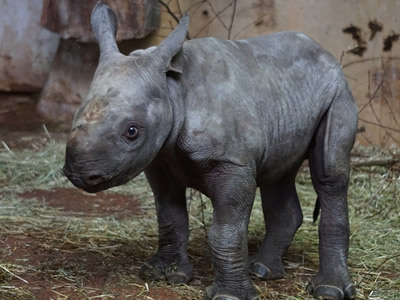
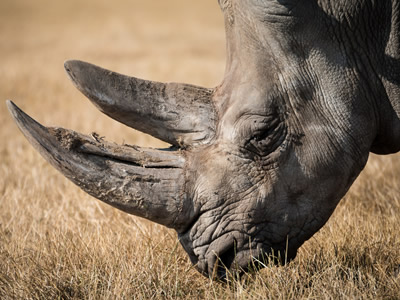
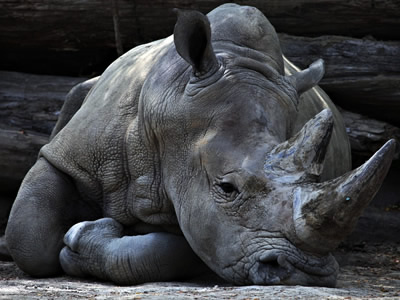
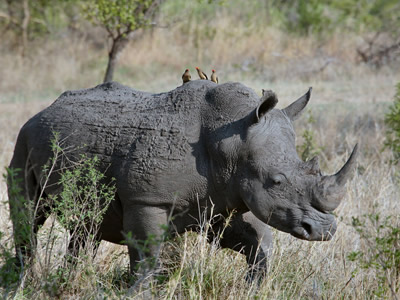
In 1997 black rhinos populations was at 65000 but only 2,400 black rhinos remained, leaving the species on the brink of extinction Rhino population losses of over 60,000 black rhinos in only 20 years Since 2013 an average of three rhinos have been poached every day. More and more birds and animals need to be protected from extinction so Me and my team chose Rhino because we wanted to raise awareness and protect this Rhino from destruction.
RHINO
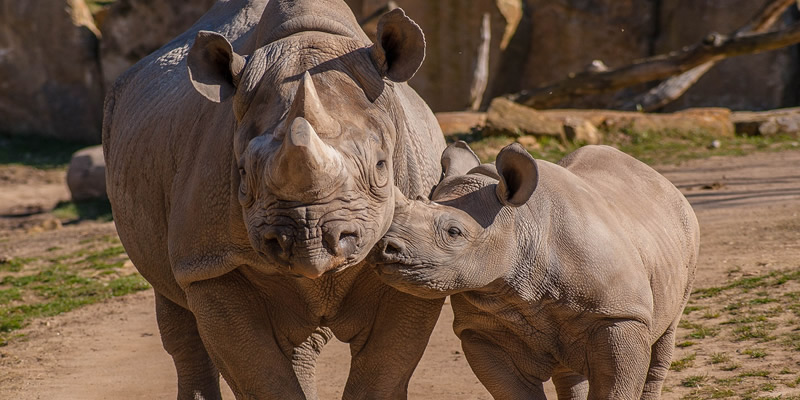
The biggest threat to the rhino is the very small size of the remaining populations. This leads to inbreeding and loss of genetic variability and vitality. The two habitats where Javan rhinos occur are secure, but much too small for long-term survival of the species.
why are rhinos so important to the environment?
Rhinos are environmental engineers in the areas where they live. For example, water-accessible meadow habitats are important for high-horned rhinos, and they help maintain the health of these meadows and the water bodies they wall, which enables them to adapt to other small plant species that share space with them. Asian rhinos scatter the seeds of plants and the fruits they eat through their dung.
physical charactristics
size: it stands 1.4 to 1.7 meters
weight: between 900 and 2300 kg
lifespan: 35 to 40 years
skin colour: gery or gery-broen skin and when wet almost black
horn: less than 20 cm long
teeth: long and sharp dagger shapped lower incisor teeth
sences: have good sence of smelling
social behaviour
sociablity:usually solitary,young animal may small group fro sometime
male territory:males in Ujung Kulon have larger territories (12-20 km2)
female terrritory:the females in Ujung Kulon are much smaller (3-14 km2)
mating and courtship:there is a short period of courtship around the time when a
female is in oestrus
sound and calls: Javan rhinos are not very vocal
gesttion period: estimated to be between 16 and 19 months
location and habbit
current range: Ujung Kulon peninsular, western Java and Indonesia
Historical range: A large part of Southeast Asia, from near Calcutta in India,
throughout Bangladesh, southern China, Laos, Vietnam Cambodia, Myanmar, Thailand, Peninsular
Malaysia, the Large island of Sumatra, and the western half of Java
Diet:eat mostly leaves, young shoots and twigs
Mud wallows: use temporary pools and puddles
Salt licks: Javan rhinos are known to drink seawater
Interesting facts about rhinos
- A group of rhinos is called a "crash".
- During their head-to-head fights, rhinos make a sound that resembles honking.
- Rhinos can spray urine over 16 feet, to dominate other males or mask the scent of a newborn calf
- Female rhinos can be pregnant for as long as 16 months
- Rhinos have terrible eyesight and struggle to see further than 30 meters.
- Their horns are made of the same material as human fingernails.
- Rhinos walk on their toenails because their feet are so sensitive
Sumatran Rhinos
Fewer than 80 Sumatran rhinos remain in the world and are recovering Population is crucial to gaining a future for this species. It may be hard to believe that the Sumatran rhinoceros stands slightly down Considered to be five feet tall and weigh almost a ton! And It is true that its African rhinoceros relatives are adults The unique lineage of the Sumatran Rhino sets it apart: it is very close Woolly is associated with rhinos that roamed the earth in time Ice age 2.6 million years ago.
It is the only Asian rhinoceros with two horns Known for being very vocal and producing a wide variety of songs Chat sounds.But the population of the world’s smallest rhino has changed Frighteningly small, and as a result, they are present Listed as dangerous. Today, there are less than As a result 80 unique Sumatran rhinos remain on Earth Poaching and habitat destruction. In addition, the result is small The population has been slowly declining as mortality rates have risen Birth rates. At the same time, these people are fragmented, Rhinos now live in remote, isolated areas with clusters Sumatra and Borneo. Because this piece is fragmentary, it is critical Dangerous species are rarely found in the wild, and there is reproduction Almost stopped.
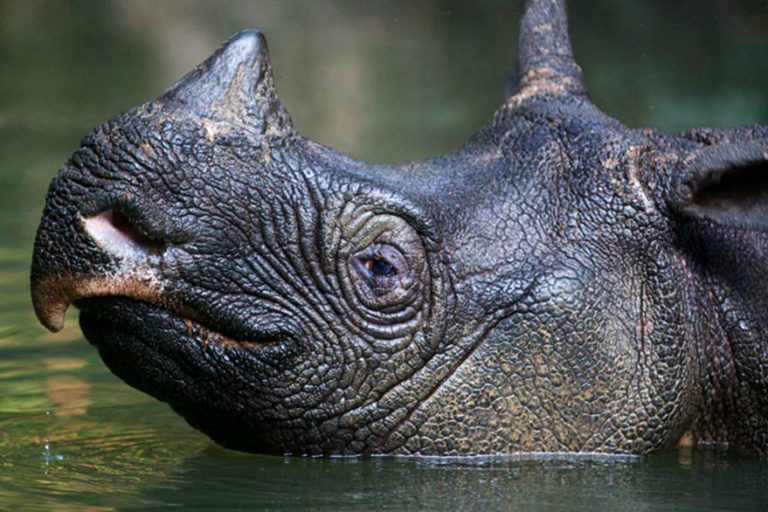
Javan Rhinos
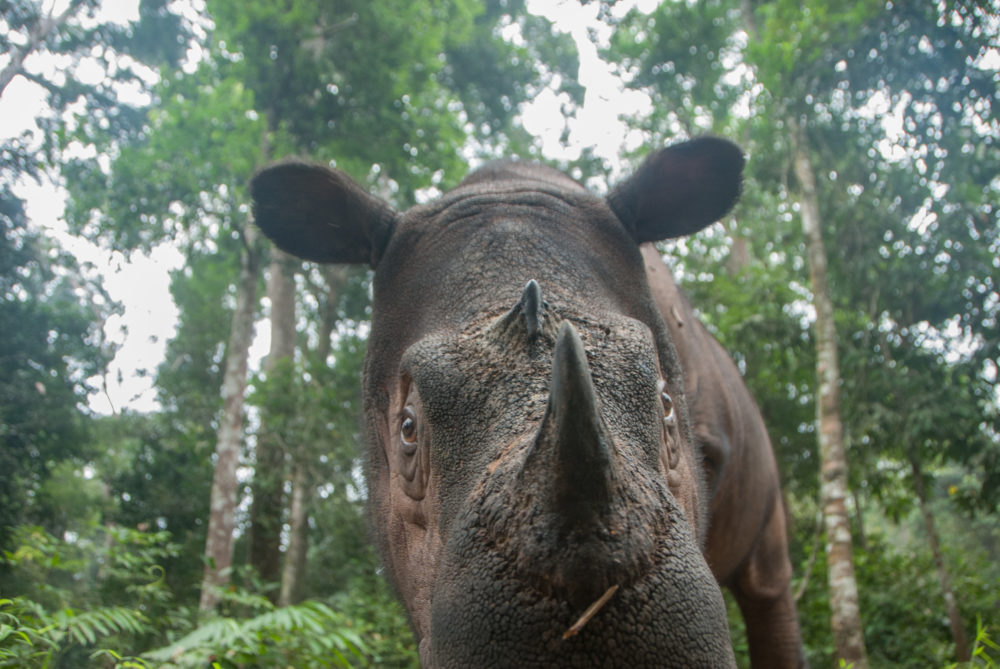
There are only 68 jawan rhinos left on the planet, all of which live on only one site: Indonesia's Ujung Kulon National Park. Rhinos can be considered one of the most exotic animals in the world, But few know that they are found in Africa and Asia There are actually five different species: white rhinoceros, Black Rhinoceros, Greater One Horn (or Indian) Rhinoceros, Sumatran Rhinoceros And the Javan (or at least one horned) rhino. The white rhinoceros, black rhinoceros, And the Greater One Horn Rhinoceros have all undergone impressive retrievals In the twentieth century due to integrated security efforts. These species continue to struggle with the ever-present threat It is unfortunate that white rhinoceros hunts The decline in the number of repeats in recent years. However, the predicament These three species do not compare the two Restricted species in Indonesia; Sumatran Rhinoceros and Javan The rhino faces a grim future without major intervention With a broad head, powerful legs and deep folds of skin like armor, The Javan Rhinoceros stands over five feet high on the shoulder and weighs Almost two tons. It is the second largest terrestrial animal Indonesia (after the Asian elephant).
Reasons why rhinos are endangered
- biased sex ratios
- failures of survival and fertility
- unstable age distributions that disrupt the propagation of the species